
Sometimes I hear students say, ‘I don’t know what to write,’ or even, ‘Oh no, anything but composition!’ Yet ideas for compositions can come from almost anywhere. Some sources of inspiration are concrete and immediately suggest sounds; others are more abstract and require imagination to translate into music. They can come from our surroundings, our senses, our memories, our emotions and our experiences.
The real difficulty is often not finding an idea, but deciding what to do with it.
Listen to the world
For a young composer, sound itself is perhaps the most immediate source of inspiration. We are surrounded by sounds that already contain musical characteristics.
Think about wind blowing through trees, running water, waves, raindrops or thunder. Each contains different combinations of timbre, dynamics, rhythm, texture and pitch. Some are relatively easy to imitate on conventional instruments; others contain indefinite pitches and complex timbres that might be represented more closely using electronic or recorded sound.
Birdsong provides an obvious example of natural sound that can be transformed into musical material. Some birds produce recognisable pitches, intervals and repeated patterns. A cuckoo’s call can become a two-note motif; another bird might suggest a more elaborate melody.
Human beings provide an equally rich sound world. Talking, whispering, laughing, crying, breathing, footsteps and other everyday sounds can all become musical material. The modern world adds machinery, vehicles, tools, telephones and electronic devices. A ringtone, an alarm or the repetitive rhythm of a machine could provide the starting point for an entire composition.
The important question is not simply ‘Can I imitate this sound?’ but ‘What musical characteristics can I take from it?’
A raindrop might become an ostinato. Footsteps could establish a pulse. Machinery might suggest interlocking rhythms. A bird call could become a melodic motif which is subsequently repeated, extended, inverted or transformed.
Turn an image into music
Music does not have to begin with sound. Visual art has inspired composers for centuries.
A painting, sculpture, photograph, piece of architecture or even an abstract shape can suggest musical ideas. There are useful parallels between the visual and musical worlds:
colour might suggest timbre; shape might suggest melodic contour; pattern might suggest rhythm and repetition; light and shade might suggest register or dynamics; foreground and background might suggest different layers of musical texture.
These are not rules. A red painting does not have a particular chord and a circle does not have a particular melody. The composer decides how the visual characteristics will be interpreted.
Try choosing an image and identifying three things that interest you about it. Perhaps it contains strong geometric shapes, contrasting colours and a large empty space. How could those three characteristics become musical decisions?
Two composers could look at exactly the same picture and produce completely different pieces. Both could be equally convincing.
Composition is not literal translation. It is interpretation.
Smooth, rough, hot and cold
Our physical senses can provide another starting point.
How might music sound smooth or rough? What musical decisions might suggest something heavy or light, hard or soft, hot or cold, still or moving?
A smooth surface might initially suggest a legato melody moving predominantly by step, while something rough might suggest irregular rhythms, dissonance or more angular melodic movement. But these associations are only starting points.
Try doing the opposite. Can you create something that feels smooth using a melody containing large leaps? Can quiet music feel violent? Can something heavy move quickly?
The less obvious solution may ultimately produce the more interesting composition.
Even taste and smell can provide inspiration precisely because their relationship with music is less obvious. What would sweetness sound like? What about bitterness or sourness?
There is no correct answer. The exercise forces the composer to decide which musical characteristics will represent an idea.
Words become music
Language provides particularly rich musical material because speech already contains rhythm, stress, pitch, contour and silence.
Choose a sentence, someone’s name or a line from a poem and speak it naturally several times. Listen carefully to its rhythm. Which syllables are stressed? Where are the pauses? Does the voice rise or fall?
Exaggerate those characteristics and a musical idea begins to emerge.
Remove the words but retain their rhythm. Try performing the rhythm on a single pitch. Then allow the pitches to follow the natural rise and fall of the spoken voice.
You have created a melody without ever sitting down and trying to ‘think of a tune’.
Once you have it, it can become conventional compositional material. Repeat it, fragment it, extend it, transpose it, put an ostinato underneath it or leave unexpected gaps between its phrases.
Tell a story
Stories, poems and memories can inspire music because they combine many different kinds of experience.
A story also has something particularly useful for a composer: structure.
Imagine a very simple narrative:
Something is still.
Something approaches.
Something happens.
Everything changes.
Calm returns – but things are not quite as they were before.
You already have the beginnings of a musical form.
Before writing any actual notes, decide how the music might change during each stage. Perhaps the tempo increases, the register rises, the texture becomes denser and the harmony becomes increasingly unstable. After the climax, the opening music might return but with one significant difference.
In this way, the shape of a composition can exist before its individual notes do.
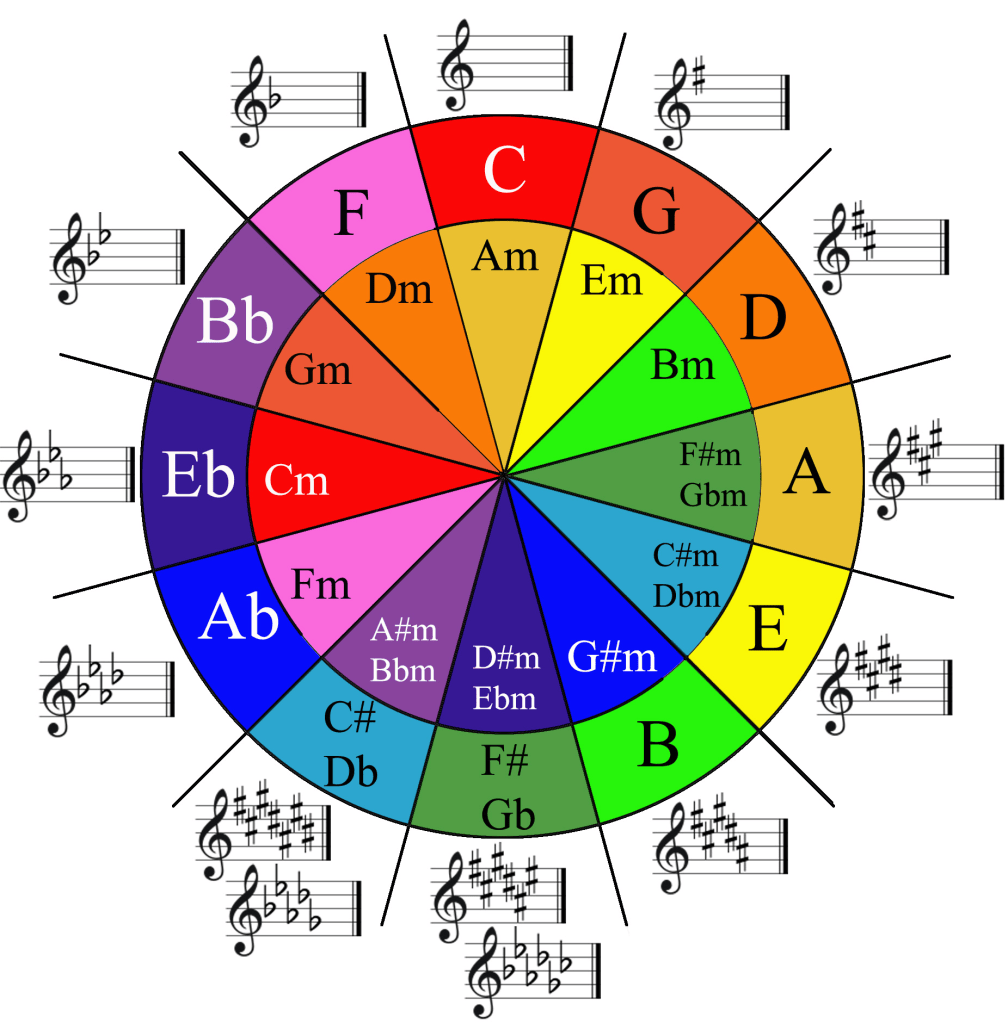
What colour is a chord?
Some people experience particularly strong associations between different senses. Chromesthesia, for example, is a form of synaesthesia in which sound can involuntarily produce perceptions or associations involving colour.
There have also been numerous attempts to construct systems linking particular colours with musical pitches. These mappings vary considerably, however, and shouldn’t be regarded as compositional rules.
That is actually much more useful to a composer.
Play a chord and ask several people what colour they associate with it. They may give completely different answers. Someone might imagine a shape rather than a colour.
So invent your own system.
Perhaps your composition has four colours. Decide what each colour represents musically and create a sequence:
Blue – Blue – Red – Yellow – Blue.
Now turn your sequence into sound.
You have effectively invented a tiny musical language whose rules apply to your particular composition.
Can music sound happy?
Composers frequently want to communicate moods and emotions. But human emotions are complicated, and musical characteristics do not have fixed emotional meanings.
We nevertheless have powerful musical conventions and associations.
Joy or excitement might be suggested by a fast tempo, energetic rhythms or a bright timbre. Calm might be associated with slower movement and greater stability. Ascending melodies can create a sense of increasing energy or expectation, while descending movement can suggest relaxation or withdrawal. Consonance and diatonic harmony can provide stability, while dissonance and chromaticism can create instability. Register, dynamics, articulation, timbre and texture can all contribute.
But none of these is a rule.
Try composing ten seconds of music that sounds joyful.
Then ask why it sounds joyful.
Now change the rules.
Can you create joyful music that is extremely slow?
Can sad music be fast?
Can threatening music be very quiet?
Can something peaceful be highly dissonant?
This is where composition becomes much more interesting. Emotional character usually results not from one musical parameter but from the interaction of many different parameters within a particular context.
Change one thing
A useful way to explore this is to take one very simple melody and perform it repeatedly while changing only one musical characteristic at a time.
Keep the notes exactly the same but change the tempo.
Return to the original and change the register.
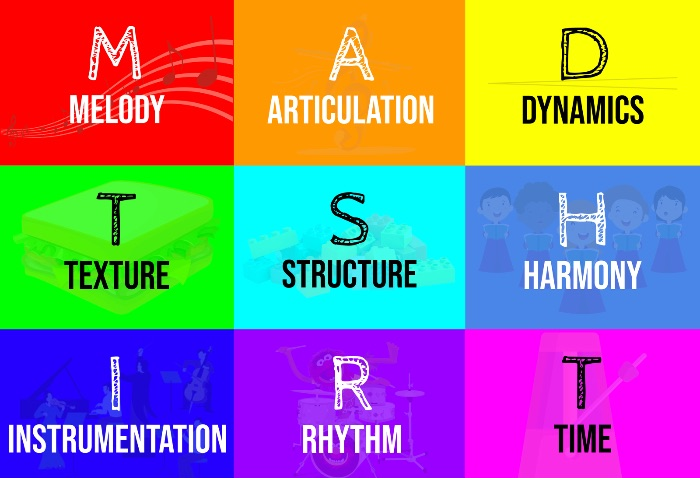
Then try changing the articulation, dynamics, harmony, timbre or texture.
Has the emotional character of the melody changed even though its pitches haven’t?
Now change two parameters simultaneously.
This demonstrates something fundamental about composition: a musical idea is much more than its notes.
Start with a motif
A composition does not need an extra-musical inspiration at all. Sometimes the starting point can simply be a musical idea.
A particularly useful starting point is a motif: a very short combination of pitches and rhythm with a distinctive character.
The famous opening of Beethoven’s Fifth Symphony demonstrates just how much can grow from remarkably little material. Its characteristic short-short-short-long rhythm and melodic contour provide material that can be repeated, developed and transformed.
Try inventing a motif containing only three or four notes.
Then resist the temptation to write another one.
How much music can you make from that single idea?
Repeat it. Transpose it. Extend it. Contract it. Invert it. Change its rhythm. Fragment it. Change the harmony beneath it. Move it into another register. Turn the melody into an accompaniment. Hide it inside another part.
A composer doesn’t necessarily need a constant supply of new ideas. Often the real skill lies in discovering the possibilities contained within an idea that already exists.
Start somewhere else
A musical idea doesn’t have to be a melody.
What could you compose first if you were not allowed to write a tune?
Perhaps begin with a rhythm?
Or a chord?
A chord progression?
A bass line?
An ostinato?
A drone?
A texture?
A particular instrumental sound?
A dynamic shape?
Or even a silence?!
Try building thirty seconds of music from one of these before introducing any melody at all.
You may discover that what initially seemed like the accompaniment is actually the most important idea in the composition.

What matters to you?
Sources of inspiration are everywhere. Take a walk, listen to the sounds around you, visit an art gallery, read a poem, look at a photograph, remember a place or experiment at an instrument.
The challenge facing a composer is therefore rarely a genuine lack of possible ideas. It is choosing between them.
What do you want to write about?
What interests you?
What atmosphere do you want to create?
What story do you want to tell?
What do you want the listener to experience?
Or perhaps you don’t want the music to represent anything beyond itself. What rhythm, sound, chord, interval or musical gesture fascinates you?
Once you have chosen your starting point, ask three questions:
What is the most important characteristic of my idea?
How can I represent that characteristic musically?
What could happen to it during the piece?
That final question is where inspiration begins to become composition.
So next time you find yourself staring at a blank page thinking, ‘I don’t know what to compose!’ don’t immediately search for a melody.
Listen.
Look.
Remember.
Imagine.
Choose something – however small – and ask:
‘What could I do with this?’
Experiment!
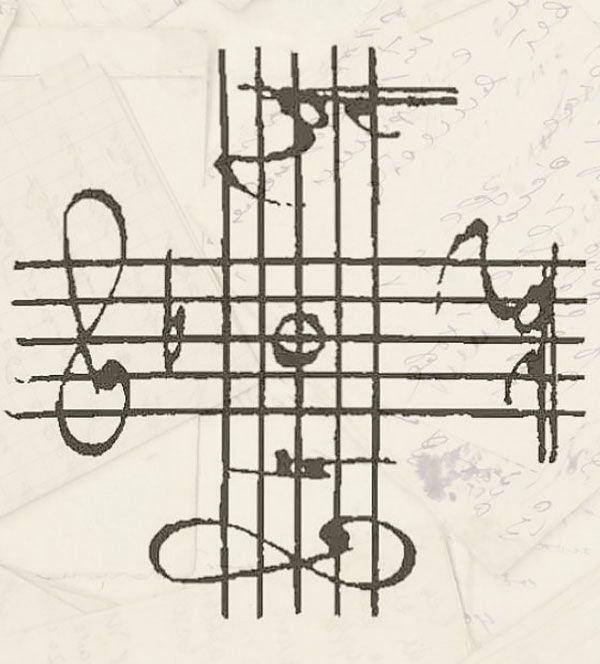
https://www.classicfm.com/composers/cage/as-slow-a-possible-aslsp-germany-organ-chord-change
Helpful websites
https://www.onemotion.com/chord-player
https://www.musicca.com/chord-player
https://www.tonegym.co/site/index
https://apps.musedlab.org/groovepizza
 RobboDoesMusic