Tag: music
-
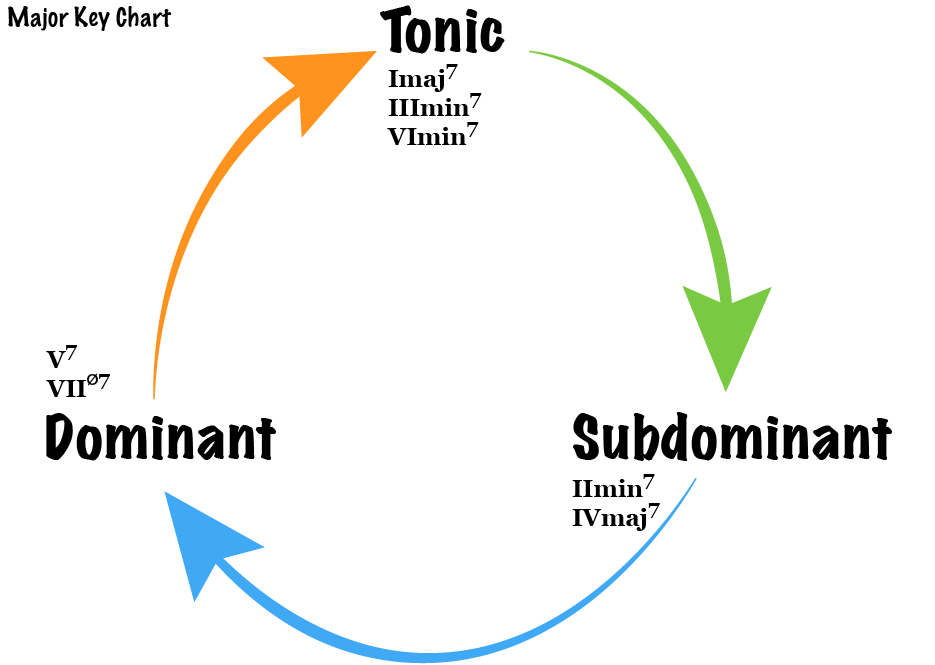
Understanding Functional Harmony: A Composer’s Secret Weapon
If you’ve ever wondered why certain chords work so well together or how musicians seem to know exactly which chord to play next, the answer usually comes down to one thing: functional harmony. Using the system popularized by the Mapping Tonal Harmony Pro app, we can break down chords into three core “functions”—Tonic, Subdominant, and…
-
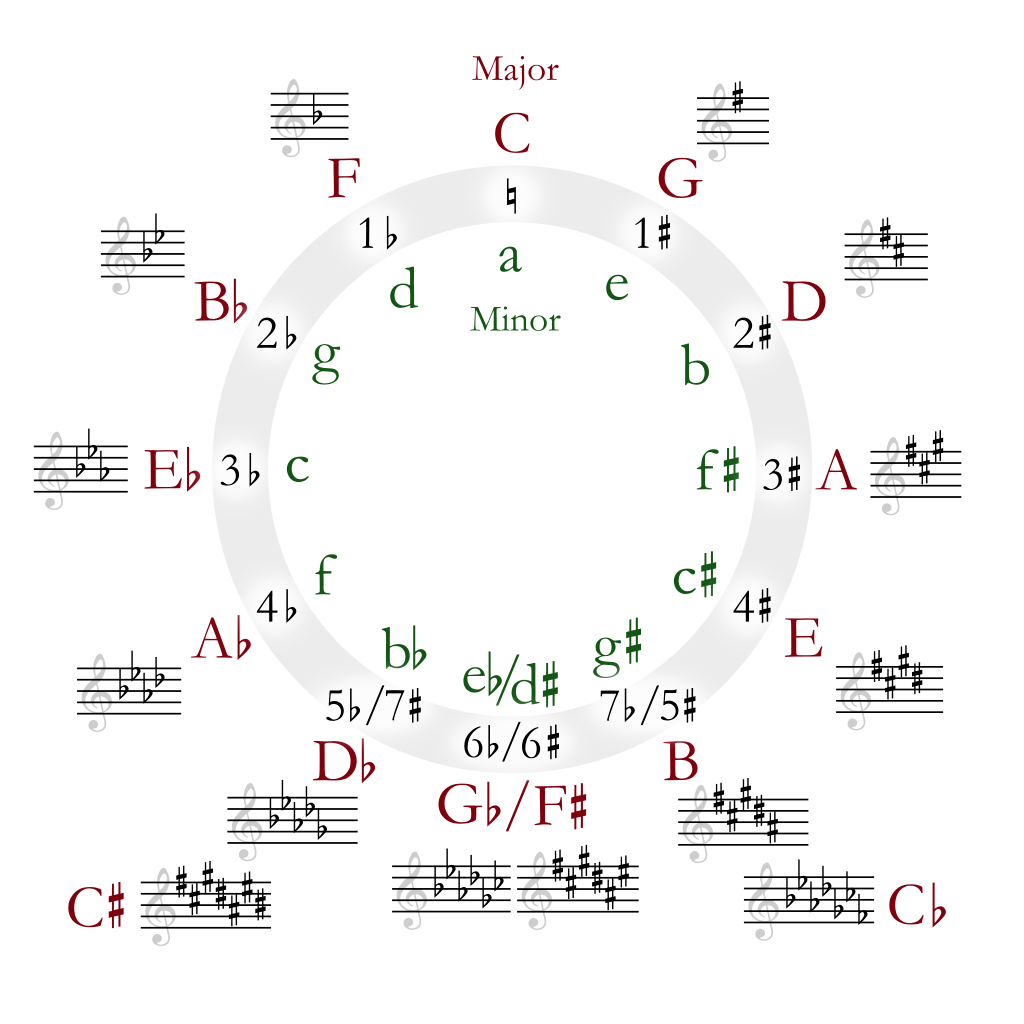
The Circle of Fifths: Your Essential Map for Understanding Music
If there’s one diagram that brings together almost everything you need to know about Western music theory, it’s the Circle of Fifths. It’s not just a handy reminder of key signatures—it’s a map that explains how music works on a deeper level, influencing harmony, tonality, chord progressions, cadences, and even the advanced concept of negative…
-
🎓 ABRSM Music Theory Grades 1–5: Complete Revision Checklist
🎼 1. Key Signatures & Scales Grade Major Keys Minor Keys Scale Knowledge 1 C, G, D, F A, E, D Tonics, scales, tones/semitones 2 A, E, B♭ G, B, E Key signatures, relative minors 3 B, A♭ C♯, C, F All scales with up to 4 sharps/flats 4 All major/minor up to 5 sharps/flats…
-
🕒 ABRSM Music Theory Guide: Time Signatures & Rhythm (Grades 1–5)
Understanding time signatures and rhythmic values is essential for reading, writing, and performing music accurately. This guide breaks down everything you need to know from Grades 1–5, including beat groupings, simple vs. compound time, and common pitfalls. 🔍 What Is a Time Signature? A time signature tells you: Example:3/4 = 3 beats per bar, crotchet…
-
🎼 ABRSM Music Theory Guide: Scales & Modes (Grades 1–5)
Understanding scales is at the heart of music theory — they shape melody, harmony, key, and even style. From major and minor scales to the introduction of modes, here’s how ABRSM builds this crucial knowledge step by step. 🔍 What Is a Scale? A scale is a sequence of notes in ascending or descending order,…
-
🎼 ABRSM Music Theory Guide: Intervals (Grades 1–5)
Understanding intervals is essential to reading music, analysing harmony, and building chords. Intervals are the distances between two notes, and you’ll see them everywhere in theory and practical playing. 🔍 What Is an Interval? An interval is the number of letter names and steps between two notes — for example, C to E is a…
-
🎵 ABRSM Music Theory Guide: Key Signatures (Grades 1–5)
Understanding key signatures is foundational to all music theory. They tell us the tonal centre of a piece and which sharps or flats to expect. Here’s a breakdown of everything ABRSM expects from Grades 1 through 5 — and how to master it. 🔑 What Is a Key Signature? A key signature is a set…
-
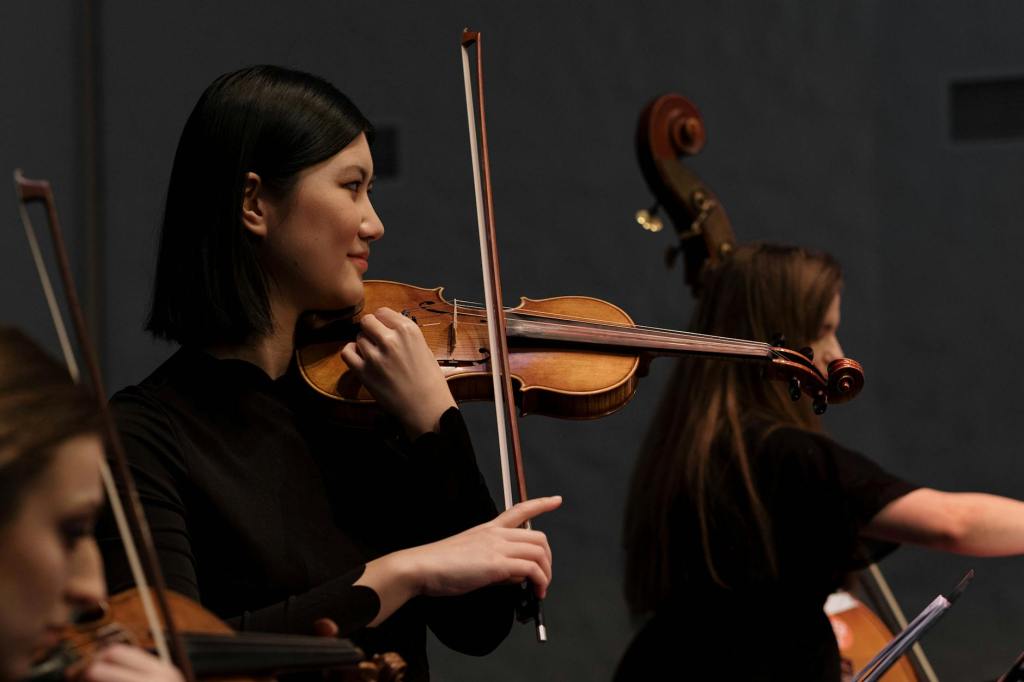
It really is a no-brainer… learn music!
Learning to play a musical instrument offers more than just artistic expression—it provides measurable academic and cognitive benefits across all stages of life. Recent research highlights how musical training enhances brain development, boosts academic performance, and supports long-term cognitive health. 🎓 Academic and Cognitive Benefits of Musical Training 1. Enhanced Language and Literacy Skills Musical…
-

🧠 The Brain’s Playground – Cognitive and Academic Benefits of Learning an Instrument
While the emotional and social advantages of learning an instrument are well-known, many are surprised to discover just how much music-making shapes the developing brain. From memory and language to spatial reasoning and maths, playing an instrument activates an astonishing array of cognitive processes. In short: music makes your brain stronger, more flexible, and more…
-
🎺 Music and Community – How Playing an Instrument Creates Social Bonds
Few things unite people like music. From gospel choirs to school bands, jazz ensembles to string quartets, playing music with others is a uniquely powerful form of human connection. Beyond technique and talent, music builds belonging—a sense of shared rhythm, mutual listening, and trust. At a time when loneliness and social isolation are rising, especially…
 RobboDoesMusic